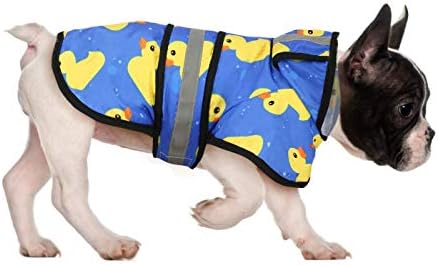
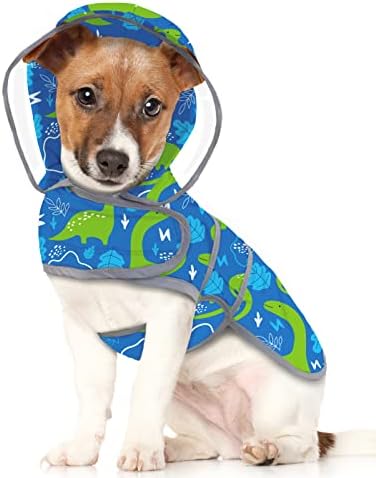
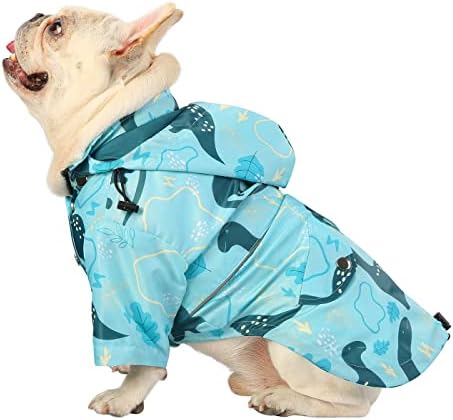
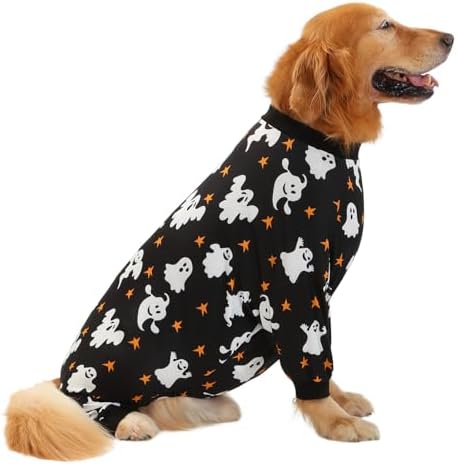
- 11 pieces in our range are made for dogs, not people
- 6 of our dog coats print in inches what their Small means
- those Smalls run from 11 inches to 18.25 inches of dog
- coat length is taken along the back, from the base of the neck to the base of the tail, with the dog standing
- a collar goes by the neck measurement, a coat goes by the back, and the two are not related
Why size letters fail on four legs
We make 11 pieces in our range for dogs instead of people, including coats, raincoats, and bathrobes. When we look across the line, the label names show the exact same problem we see in human clothing. A letter printed on a tag does not translate to a steady set of proportions from one garment cut to the next.
Across our patterns, 6 of our dog coats spell out in the listing what Small means in inches, and the numbers do not match. The smallest calls it 11 inches of dog and the largest calls it 18.25 inches. That is the same word applied to two completely different patterns, with a gap wide enough to fit a separate animal between them.
The one measurement that sets the coat
The single measurement that decides the fit of a dog coat is the length along the spine. We measure along the back from the base of the neck to the base of the tail, taken while the dog is standing on all four feet. If the animal sits or curls up, the tape stretches over the curve and adds inches that the standing pattern cannot use.
Taking that back length correctly keeps the hem where it belongs. A coat cut too long hangs past the base of the spine and fouls the tail end when the dog moves. A coat cut too short leaves the lower back wet under the rain, which defeats the purpose of putting a shell on the animal in the first place.
Separating the collar from the coat body
A collar size tells you nothing useful about the body pattern of a jacket. A collar goes strictly by the neck measurement, while a coat goes by the back length, and the two are not related in any regular ratio. A stocky dog with a thick neck might carry a short back, while a slender dog often carries a long spine.
We cut our chest panels and neck openings to fit around the body girth, but the back panel still dictates whether the garment stays in place. Relying on the neck girth alone to pick a jacket size usually means the body of the coat turns out either far too baggy or far too tight along the spine.
Lining up the hardware and the harness slit
A proper back measurement is also what makes the leash hole usable. We cut harness openings and leash slits at a set point down the back seam. If the coat length is wrong for the dog, that access hole shifts forward or backward and no longer lines up with the attachment ring on the gear underneath.
When the leash opening shifts out of place, the fabric bunches under tension and pulls the entire neckline backward. Checking the standing length from neck base to tail base against the specific product chart is the only way to ensure the leash slit sits directly over the harness ring without dragging the shell.
Measuring the back length before choosing a size gives a dependable fit that a generic label letter cannot supply.